Great Wall, Great Team
This piece was co-authored with my friend and colleague Leina Shi based on our observations of collective leadership while climbing the Great Wall of China.
Traversing a rock face a thousand meters up on the Great Wall of China may not seem the most obvious place to reflect on leadership, but it proved to be a powerful lesson in team dynamics and collective leadership.
We were among a small group of colleagues dedicated to exploring the remote and wild sections of the Great Wall, brought together by a passion for adventure and the stunning scenery around Beijing. That jagged spine of masonry is part of a defensive system begun more than two thousand years ago, now stretching for well over twenty thousand kilometres across northern China.
One of our more demanding excursions involved crossing a precarious rocky ridge – with sheer drops on either side – to reach the highest point of Simatai. A part of wall that was rebuilt in the Ming dynasty to guard the approaches to Beijing and often described as “the best of the Great Wall”.
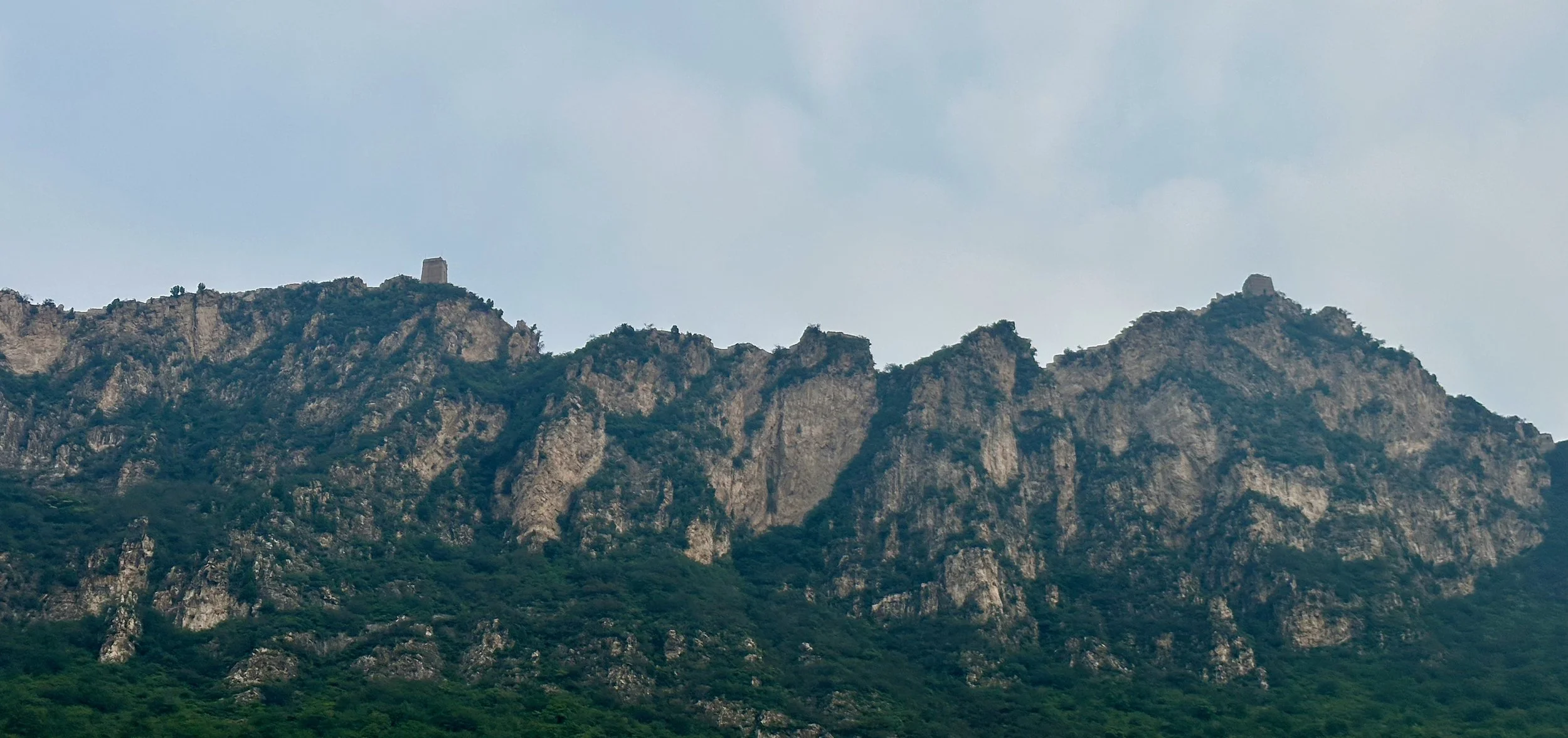
The Great Wall at Simatai
Having reached the summit, and after a brief pause to rest and take in the view from a crumbling, ancient watchtower, we headed down to celebrate over spicy roast fish and cold beer at a local restaurant.
We also realised that great teamworking had just got us safely over one of the most extreme points of the Great Wall.
Our shared purpose was immediately obvious as a success factor. Along with our different individual reasons for taking on the challenge, and the collective awe of our surroundings, we were all determined to complete the ascent and descent safely, as one group. We maximised our chance of success by weighing up the physical risks, weather, available daylight, and other external factors.
In leadership terms, this was a clear example of a strong shared cognitive model and collective efficacy: a common understanding of the task and confidence that, together, we could deliver it.
Trust among the team was a shared value and major success factor. Trust that had been built up over numerous trips and challenges. Trust that regardless of experience or ability level, each team member could be confident we would play our respective roles in supporting each other to achieve the team objective.
This trust created what Amy Edmondson would call psychological safety: the confidence that we could admit uncertainty, ask for help and offer candid guidance without fear of embarrassment, which is critical when the consequences of error involve a sheer drop rather than a missed deadline.
We adopted our roles instinctively and without discussion, based on our experience, technical abilities, personalities, and knowledge of each other. The experts among us led, guided, helped and encouraged the less confident in pushing the limits of their comfort zone and potential, providing trust and support. The lack of egos was noticeable and welcome – the focus throughout was on achieving the team goal, not individual success.
Leadership here was clearly distributed: authority shifted fluidly to whoever had the most relevant expertise at a given point, a practical illustration of leadership and roles had clearly moved beyond the early, exploratory and testing stages of team development into genuinely high-performing mode.
Being outdoors intensified this dynamic. Hours of steady climbing with phones buried in rucksacks and the city far below created expanses of silence in which conversations could deepen or simply fall away, and the repetitive rhythm of walking made space for slower, more reflective thinking.
Research on attention restoration and walking suggests that time in natural environments can significantly enhance problem-solving, creativity and the capacity to hold ambiguity – precisely the cognitive qualities that complex leadership challenges demand. On the Simatai ridge, this felt tangible: as the view widened, so did our perspectives on questions we had carried up from our desks.
Alongside the inherent rewards of reaching our destination, seeing our team dynamics play out so naturally with a shared purpose, values, trust, individual commitment, and achievement – followed by a well-deserved celebration – made it an unforgettable day.
It also offered a lasting reminder that effective leadership is rarely about a single heroic figure at the front; it is about the quality of relationships, judgement and shared sense-making under pressure, sometimes learned best while edging along an ancient wall high above the valley floor.
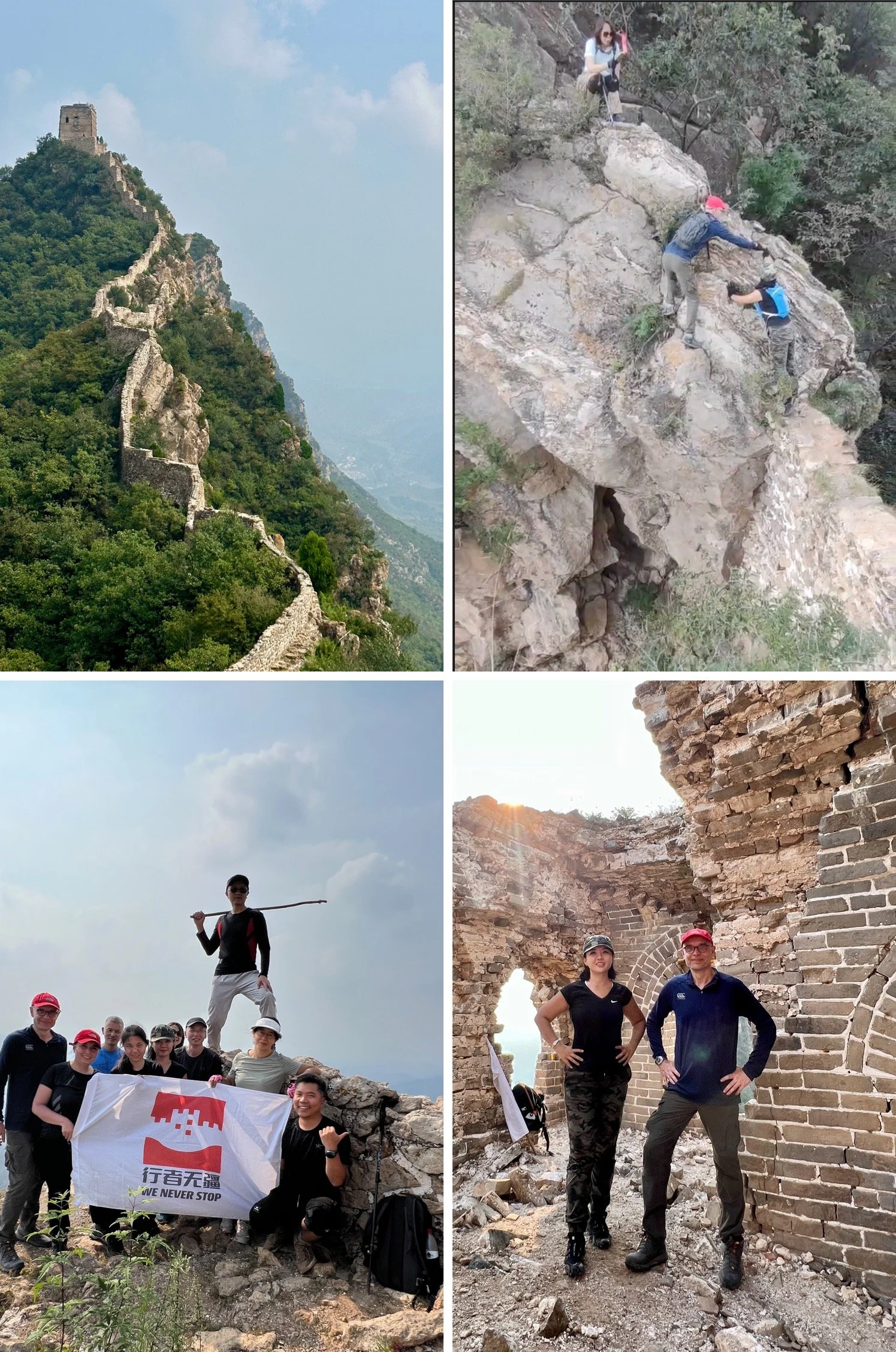
Great Wall, Great Team!